

Last Updated on May 6, 2026 by David
Identifying the Root Causes of Dullness and Patchiness in the Windsor Hallway Floor
Conducting a Comprehensive Examination of the Tile’s Condition
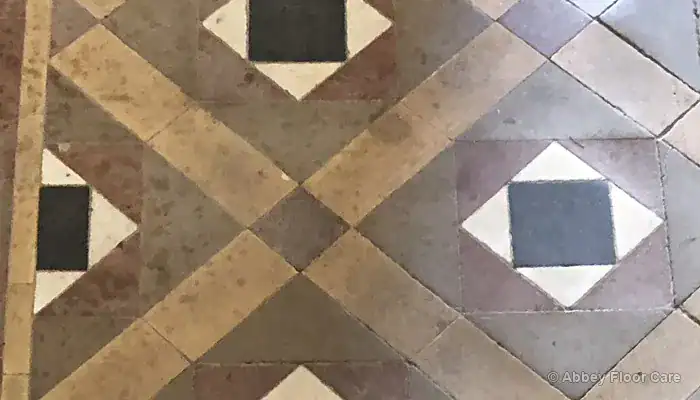
Victorian tiles that appear consistently dull and patchy, despite regular cleaning, often face challenges that extend beyond surface dirt. The fundamental issues typically lie beneath the surface, as illustrated in the Windsor hallway. This space displayed a weary appearance, characterised by darker traffic lanes and uneven colour throughout its intricate design, even after multiple cleaning attempts by the homeowner. The unglazed clay surface allowed rinse water, displaced dirt, and detergent residues to seep into shallow pores, obstructing effective removal and leading to an unattractive finish.
This particular hallway is situated within a historic property in Windsor, known for its accumulation of outdated surface treatments over the years. Windsor features a blend of Victorian and Edwardian terraces, grand period townhouses, and more contemporary homes from the 20th century, with many buildings dating back to the mid to late 19th century. Victorian tile floors are typically found in entrance halls, porches, and often in kitchens or utility spaces within these residences. Located in the Royal Borough of Windsor and Maidenhead in Berkshire, Windsor is part of the extensive historic area west of London.
The homeowner was bewildered by the persistent lack of cleanliness in the clay tiles. The issue was not limited to isolated stains or damaged areas; rather, it manifested as a pervasive cloudy film, inconsistent colouring, and a dull finish that returned every time the floor dried. A similar scenario was observed in the Victorian tile cleaning project in Farnham, where contamination within the tiles and grout resulted in structurally sound floors that lacked vibrancy. The Windsor floor required a careful distinction between removable residues and its original surface character.
Investigating the Factors Contributing to Residue Buildup on the Clay Surface
Victorian clay tiles have a unique tendency to absorb cleaning water, in contrast to modern glazed tiles that typically repel moisture. Their inherent porosity permits moisture, detergents, and dirt to penetrate the tile body instead of remaining on the surface. Standard cleaning methods often inadvertently re-wet the same contaminants instead of effectively lifting them away. The outcome is predictable; the tiles appear improved when damp but revert to an uneven finish once dry.
The construction of the tiles plays a significant role in this dilemma. Dust-pressed tile bodies are softer than modern vitrified surfaces, with many Victorian tiles featuring colour throughout rather than solely on the surface. While encaustic and quarry tiles may seem robust, the clay slip and colour layer are susceptible to wear. Once the surface sustains abrasion, that damage becomes irreparable, affecting the overall aesthetic of the tile.
The intricate patterns also introduce additional risk. The clay slip inlay is embedded within the tile body, rather than simply layered on top, meaning aggressive cleaning pads or powders can disrupt the entire surface. In areas where wear has already compromised the surface, even moderate abrasion can exacerbate fading. Small disturbances can lead to noticeable changes in the tile’s appearance.
The term residue lock-in aptly describes the scenario: old cleaning films, coating residues, and trapped soil become ensnared within the porous surface, rather than remaining loose. The signs are familiar—cloudy patches, darker traffic areas, and a floor that appears cleaner when wet but reverts to dullness when dry. The only effective solution involves controlled cleaning with repeated wet extraction, ensuring that contamination is removed before it has the chance to settle back into the tile’s pores.
Implementing Effective Cleaning Protocols for the Hallway Floor
Utilising Non-Abrasive Cleaners was a fundamental aspect of the entire cleaning strategy, as these tiles cannot endure treatment similar to modern hard surfaces. Harsh chemicals and abrasive pads can diminish colour and disrupt the finish, necessitating a gentle approach with a soft-bristle brush, applied in a controlled manner and thoroughly rinsed. This effort remained strictly within the realm of cleaning, as more aggressive measures were unnecessary.
The state of the subfloor also played a critical role in the cleaning strategy. Many older floors are laid over lime mortar screeds, rubble and lime substrates, or suspended timber structures. Cracks, slight movement, or unevenness often provide insight into how moisture travels through the floor. While these factors were not addressed as repair issues in this case, they underscore the importance of avoiding the sealing of a moisture-active floor while it remains contaminated or wet.
Older bedding layers pose a genuine risk of over-wetting. A rubble and lime base can retain moisture beneath the tiles, which can migrate if prompted. In scenarios involving suspended timber or lime screed, it is essential to meticulously control water usage during cleaning. Excessive water can destabilise the system and push salts toward the surface, creating further complications.
<a href="https://fabritec.org/high-gloss-sealers-the-hidden-risk-for-victorian-hallway-tiles/">Efflorescence</a> was also considered during the assessment, as moisture movement can lead to white salt deposits. This occurs when dissolved minerals are transported upwards and left on the surface as moisture evaporates, resulting in pale powder or white marks. The solution involves targeted treatment and proper extraction, rather than sealing it in.
Understanding Why Mopping Alone Was Insufficient for Comprehensive Cleaning
Domestic mopping merely redistributes contaminants, lacking an effective extraction phase. While it may loosen dirt, it fails to remove the slurry from tile pores and grout lines before it has the opportunity to settle back in. the same residue film continues to resurface repeatedly.
Chemistry plays a vital role in the cleaning process as well. Using an inappropriate cleaning fluid can leave behind more residue than it removes. Neutral pH cleaners are suitable for routine maintenance, where two-bucket systems and clean rinse water help to prevent recontamination. During corrective cleaning, stronger professional methods are essential as a first step. Only after this phase does maintenance chemistry become beneficial for preserving the floor.
The ultimate goal lies in removing residue without compromising the historical character of the floor. Slight dishing along traffic routes, subtle colour variations, and softened tones contribute to the charm of a historic floor; they should not be perceived as defects. A properly cleaned and sealed floor will exhibit a significantly enhanced appearance—often revitalised beyond what it has shown in decades—while still retaining its distinctive character.
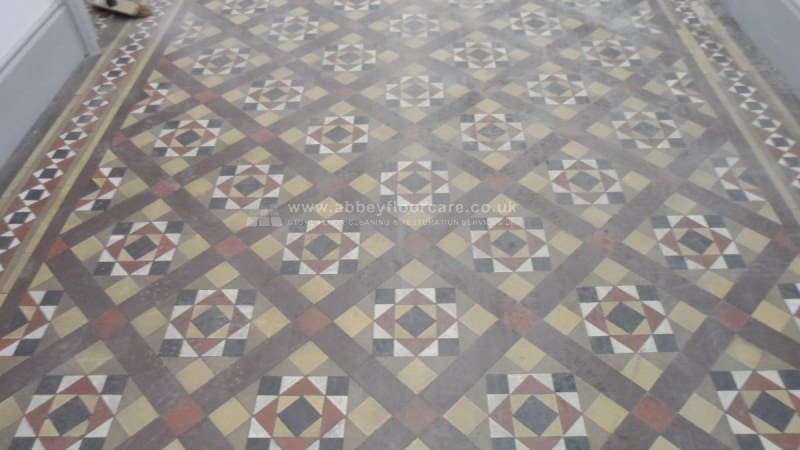
Uncovering Why the Floor Initially Appeared Clean Before Quickly Becoming Cloudy and Uneven Again
The cloudiness that re-emerges as the floor dries typically indicates that moisture carries residue back into the clay surface, which was precisely what occurred in this case. Wet cleaning temporarily enriched the tile body, causing the colour to appear deeper for a short period. This effect faded as the tiles dried, leading to the same residue and the same disappointing outcome once again.
Trapped residue remains until effective cleaning penetrates the open clay body.
The contrast between the wet and dry states provided a clear diagnosis. A floor that merely appears improved when damp is not genuinely clean; it is simply concealed for a time. The corrective action was straightforward in principle but required meticulous execution: maintain the slurry in a mobile state, extract it while still wet, and repeat the process until the surface no longer reverted to a film.
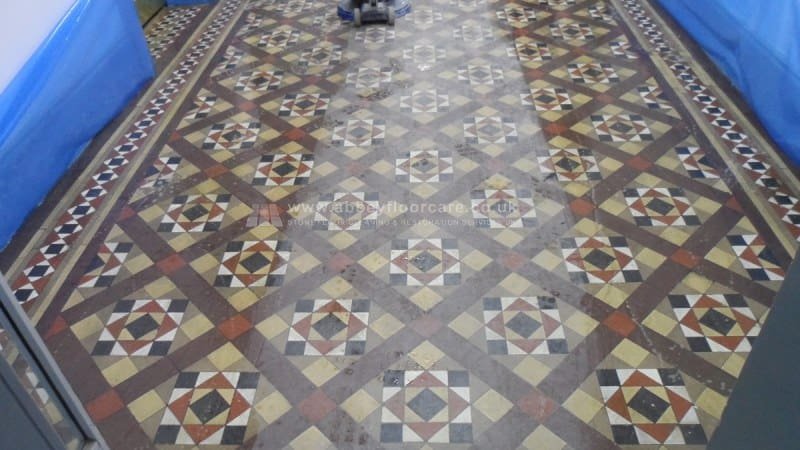
Assessing How Repeated Cleaning Passes Effectively Eliminated the Deep Residue Causing the Dull Finish
Merely repeating scrubbing often exacerbates the issue by driving loosened residue deeper into the tile. The Windsor project successfully avoided this pitfall. Old coating residue was softened, the surface was meticulously agitated, and the soiled liquid was extracted before it could settle once more. This sequence is essential; neglecting any step results in the mere redistribution of contamination rather than true removal.
Slurry extraction was the pivotal moment in the cleaning process. A wet vacuum efficiently removed suspended dirt, softened sealer, and contaminated rinse water from the floor. Only after this extraction could a neutral pH cleaner be applied for ongoing maintenance. The same principle applied in the Farnham Victorian tile cleaning case study, where eliminating contamination was paramount rather than merely spreading it thinly across the surface.
This method safeguarded the original face of the tiles by avoiding abrasive products and unnecessary force. Loose dirt was removed, the floor was thoroughly rinsed, and the clay was allowed to dry before any protective measures were considered. Once the layer of residue was eradicated, maintaining the surface became significantly more straightforward.
Exploring the Transformation of the Hallway Floor After Contamination Removal and Surface Stabilisation
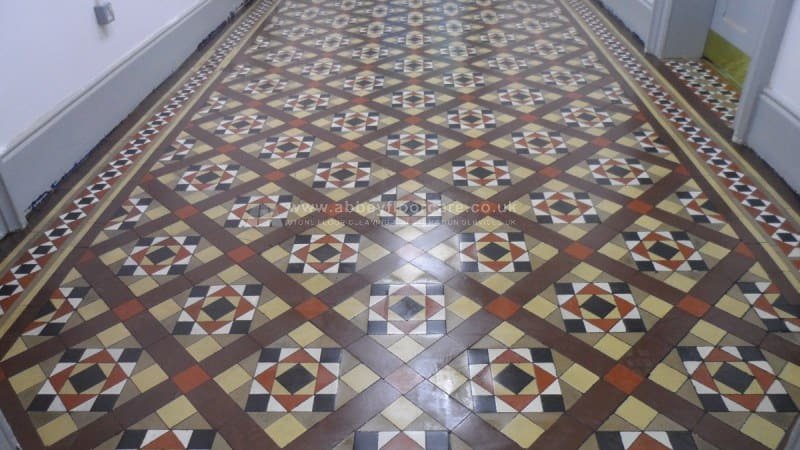
After the slurry was effectively extracted, the floor no longer reverted to its familiar cloudy finish. Prior to cleaning, the colours were muted, and traffic lanes exaggerated the wear patterns. Following the cleaning process, the tile colours became more vibrant, and the pattern was distributed more evenly across the area, enhancing the overall aesthetic appeal.
<a href="https://limitsofstrategy.com/porcelain-tile-floor-cleaning-for-a-spotless-finish/">Before cleaning</a>, residue and outdated coatings obscured the clay’s natural beauty. After cleaning, a breathable impregnating sealer was applied, supporting the surface without creating an overwhelming film. This distinction is crucial; a properly cleaned and sealed floor provides a far more pleasant living experience compared to one burdened with residue.
Aftercare played a vital role in the handover process, as long-term performance hinges on subsequent actions. Regular neutral cleaning, consistent grit removal, and sensible resealing intervals are essential for maintaining the results achieved. It is critical to avoid abrasive pads, as they gradually erode the surface and compromise pattern clarity. Effective maintenance routines are detailed in the Victorian and Minton tile cleaning hub.
Discovering Similar Victorian Tile Cleaning Success Stories and Planning Your Next Steps
Reviewing similar case studies can help ascertain whether the dullness is due to residue, moisture movement, or genuine surface wear. The outcome in Windsor aligns with other projects where coatings, grout contamination, and clay absorption influenced the results. You may also wish to explore the Darlington Victorian tiles hallway cleaning project and the Tutbury Minton tile cleaning case study for similar insights and valuable knowledge.
The next step involves a thorough assessment. Some floors require cleaning, others necessitate residue removal, and some may need moisture-sensitive protection. Not every floor demands restoration. The comprehensive Victorian tile cleaning and care hub consolidates these examples, allowing you to compare symptoms and determine a safe course of action moving forward.

David Allen — Abbey Floor Care
David Allen has dedicated over 30 years to cleaning and restoring Victorian and encaustic clay tile floors across the UK with Abbey Floor Care. This Windsor case study illustrates how old sealer residue, dull clay tiles, and recurring contamination were rectified through controlled cleaning, slurry extraction, and breathable protective measures.
The article Clay Tiles In Windsor Hide Old Residue Underfoot first appeared on https://www.abbeyfloorcare.co.uk
The Article Clay Tiles in Windsor Conceal Hidden Residue Below appeared first on https://fabritec.org
The Article Clay Tiles in Windsor Hide Undetected Residue Below Was Found On https://limitsofstrategy.com
The Article Clay Tiles in Windsor Conceal Hidden Residue Below found first on https://electroquench.com